History
Explore how TMJC's History programme builds critical thinking through inquiry, discussion, and enrichment activities that connect the past to the present.
History at the A-Level invites students to investigate how and why the modern world developed. Both H1 and H2 students examine significant events, consider the experiences and perspectives of different groups, and explore why historians may arrive at different conclusions. Through source-based case studies and essay writing, students learn to evaluate evidence, assess competing interpretations and develop clear, well-supported judgements.
H1 History focuses on the Cold War and the modern world from 1945 to 1991. Students examine how rivalry between the United States and the Soviet Union reshaped international relations, and how the interests and actions of countries and leaders in East and Southeast Asia influenced the way the Cold War developed in the region. Through these interconnected histories, students gain a better understanding of the Cold War’s varied impact and its continuing significance today.
H2 History offers a broader and more in-depth study of the forces that shaped the second half of the twentieth century. Students explore the changing international order, including the Cold War, the development of the global economy, and efforts to manage international conflict and cooperation. They also examine post-independence Southeast Asia, comparing how countries approached nation-building, economic change, and regional conflict and cooperation.
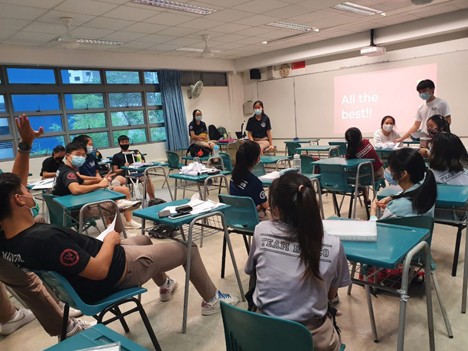
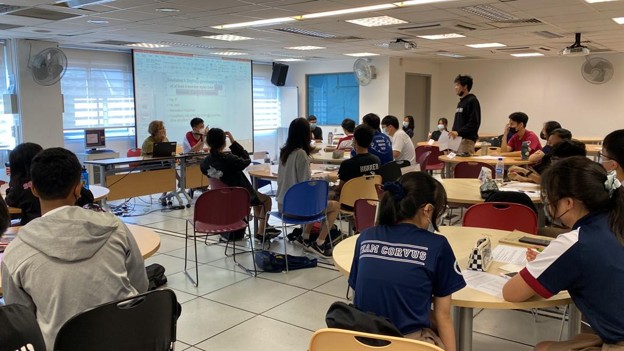
History comes alive at TMJC through discussion, debate, simulation and engagement with issues beyond the classroom. Students are given regular opportunities to test their ideas, challenge assumptions and defend their interpretations in a supportive learning environment.
The Department actively creates opportunities for students to broaden their perspectives and enrich their learning beyond the classroom. Through programmes and activities such as PAGE (Project Work, Arts & Humanities, General Paper and Economics) Week, Model United Nations and ASEAN Conferences, talks and learning journeys, students are exposed to diverse ideas, contemporary issues, and regional and global developments. These experiences nurture intellectual curiosity, encourage engagement with different viewpoints, and deepen students’ appreciation of the relevance of History to the world around them.
Find out more about the H1History (8838) and H2 History (9174) syllabuses. (opens in new tab)
.jpg)