Geography
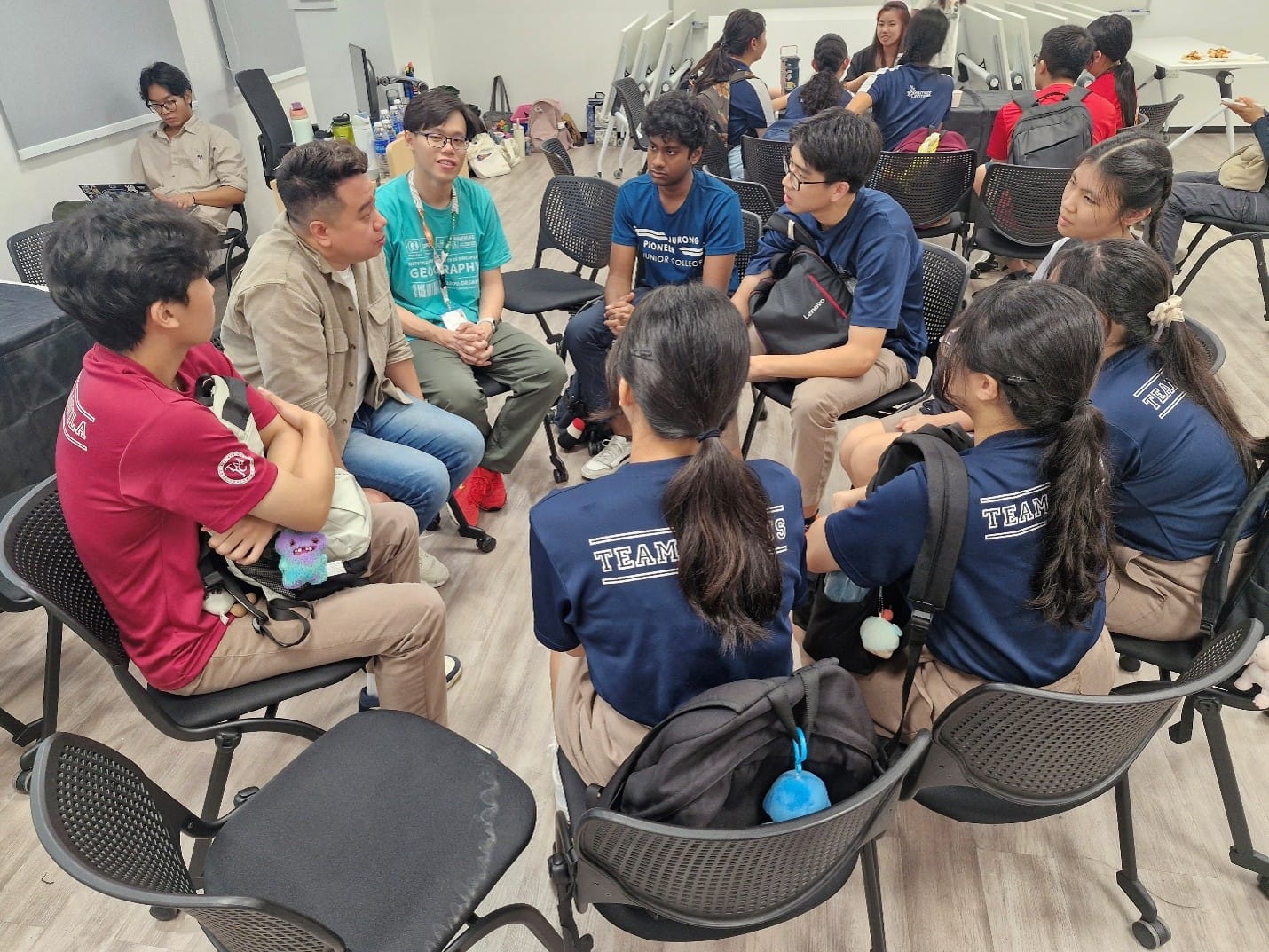
Explore TMJC's Geography programme, where students learn through fieldwork, speaker series, and enrichment activities that connect classroom learning to real-world issues.
Geography education in Singapore seeks to develop in students an understanding of the interactions between physical and human environments, a critical appreciation of geographical issues across different spatial scales, and the ability to make informed decisions about contemporary global challenges. The A-Level Geography curriculum develops students' conceptual understanding of geographical knowledge, enabling them to examine the processes that shape natural and human systems, analyse the complex relationships between people and places, and evaluate diverse perspectives on issues affecting societies and environments. Geographical inquiry is central to the syllabus, equipping students with the skills to investigate real-world issues through the analysis of evidence, application of geographical concepts, and reasoned evaluation of sustainable and equitable solutions.
TMJC's Geography programme welcomes students who are curious about the world around them and keen to explore the dynamic interactions between people, places and environments. Through an integrated study of physical and human geography, students develop a deeper understanding of topics such as climate change, sustainability, the global economy and urban liveability, alongside the physical processes that shape our world, including hydrology, lithology and atmospheric systems. Students learn to analyse and interpret a wide range of geographical data and sources, formulate well-reasoned arguments, judiciously evaluate evidence, and communicate their ideas in a coherent and well-supported manner. The programme adopts an inquiry-based approach and leverages a range of digital and AI-enabled learning tools, including the MOE Student Learning Space, Google Workspace applications and other educational technologies, to foster active discussion, collaboration, independent learning and timely feedback. Through these experiences, students develop the analytical, evaluative and critical thinking skills needed to make sense of an increasingly interconnected and rapidly changing world.
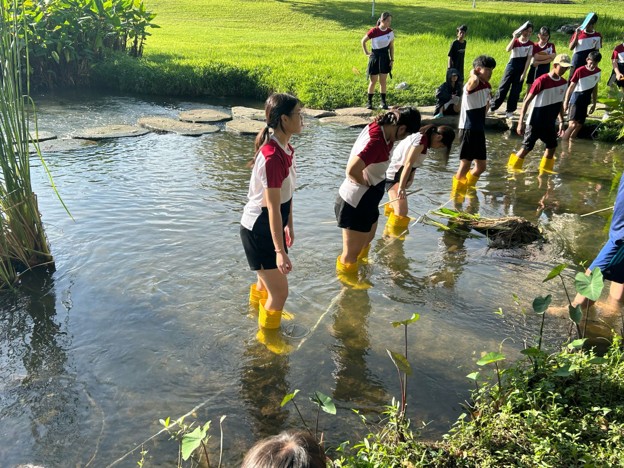
To extend learning beyond the classroom, students participate in authentic fieldwork and overseas learning experiences during their course of study. These opportunities allow students to apply geographical inquiry skills in real-world contexts by collecting and analysing primary data, investigating geographical phenomena, and evaluating the interactions between physical and human environments. Through local fieldwork, including liveability studies and hydrology field investigation at the Bishan–Ang Mo Kio Park, students gain firsthand experience in applying geographical concepts and field techniques. Overseas learning journeys to Vietnam further enrich students' understanding through the study of karst landscapes, river systems, delta ecosystems and issues of sustainability, broadening their appreciation of the interconnectedness of physical and human processes across diverse geographical settings. Together, these authentic learning experiences reinforce the relevance of Geography to everyday life while strengthening students' investigative, analytical and evaluative skills.
Find out more about the H1 Geography (8834) and H2 Geography (9173) syllabuses. (opens in new tab)
.jpg)